



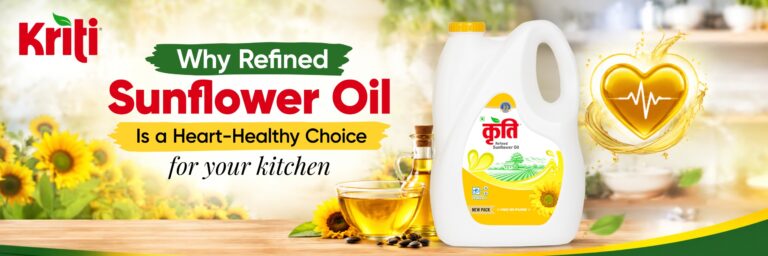
A familiar bottle of cooking oil sitting on the kitchen shelf becomes part of countless everyday meals, from the first tadka in the morning to a warm sabzi at dinner. For many Indian households, choosing the right oil is simply part of planning healthy and tasty meals. Refined sunflower oil is a popular choice because of its mild flavour, versatility and unsaturated-fat content.
Kriti offers refined sunflower oil as part of its edible oil range, giving households an option for everyday cooking. Understanding its nutritional profile and how it fits into a balanced diet can help you make sensible choices when selecting cooking oil for your family.
Key Takeaways
- The main fats in sunflower oil are unsaturated fats. This includes both polyunsaturated and monounsaturated fats.
- Replacing some saturated fat sources with unsaturated fats can support a more healthy dietary pattern.
- Refining produces a mild-flavoured oil which is good for a wide range of cooking.
- The health value of cooking oil depends on the overall diet, how much you eat and how you cook.
- Good kitchen practices such as not reheating oil are important to maintain the food quality.
What Is Refined Sunflower Oil?
Sunflower oil is produced from sunflower seeds and is a common choice for cooking due to its light flavour and versatility. Refining is a series of processes that improve the appearance, flavour and stability of the oil by removing unwanted materials. This makes refined sunflower oil good for different kinds of meal preparation. Its neutral flavour also allows the taste of vegetables, spices and other ingredients to remain prominent.
The term sunflower edible oil can refer to sunflower oil intended for food preparation. When choosing any edible oil, checking the product label, storage guidance and quality information can help you understand what you are purchasing.
What Does Sunflower Oil Contain?
Looking at sunflower oil nutrition helps explain why it is frequently included in discussions about cooking oils and dietary fats.
Sunflower oil contains:
- Essential fats Polyunsaturated fats.
- Monounsaturated fats as part of a balanced fat intake.
- Vitamin E – a nutrient known for its antioxidant qualities.
- Energy from dietary fat that the body requires in proper amounts.
The exact nutritional content will depend on the type of oil and how it has been processed. The most accurate information is found on the nutrition panel of the product you buy.
How Can Sunflower Oil Fit Into a Heart-Healthy Diet?
Heart health is influenced by many aspects of daily life, including diet, physical activity, body weight, sleep and other lifestyle factors. A single cooking oil cannot determine cardiovascular health. Dietary fat quality is still worth considering. Unsaturated fats can be a useful part of a balanced diet, particularly when they replace foods containing higher amounts of saturated fat.
This is where sunflower oil for heart health can be discussed in the context of the wider diet. Using an oil rich in unsaturated fats instead of regularly relying on sources high in saturated fat may help improve the overall fat profile of meals. The quantity used also matters. All cooking oils are calorie-dense, so using a suitable amount while maintaining a varied diet is important.
Refined Sunflower Oil for Everyday Cooking
A cooking oil needs to work well with the meals you prepare regularly. Sunflower oil has a mild flavour, which makes it easy to use across a variety of Indian recipes.
It can be used for:
- Preparing vegetables, dal and curries.
- Sautéing onions, spices and other ingredients.
- Making snacks and fried foods.
- Baking and other recipes where a neutral-tasting oil is preferred.
Using different cooking methods and keeping oil consumption within a balanced diet can help support sensible everyday eating habits.
Refined Sunflower Oil vs Other Cooking Oils
There is no single oil that is perfect for every person or every recipe. Different oils contain different proportions of fatty acids and have different flavours and cooking properties.
When comparing oils, consider:
| Factor | What to Check |
| Fat profile | Saturated, monounsaturated and polyunsaturated fats |
| Flavour | Whether it suits your recipes |
| Cooking use | Whether it fits your usual preparation methods |
| Nutrition | Vitamin and fat content |
| Quality | Labelling, packaging and manufacturing information |
What Are the Benefits of Using Sunflower Oil in the Kitchen?
The potential sunflower oil benefits are mainly connected with its nutritional composition and versatility as an everyday cooking ingredient. Its unsaturated-fat content can fit into a balanced dietary pattern, while its mild taste makes it suitable for many recipes. Sunflower oil also provides vitamin E, although the amount depends on the specific product.
People should also remember that replacing one oil with another does not automatically make a diet healthier. Overall food choices, portion sizes and cooking habits still play an important role.
Choosing Refined Sunflower Oil for Your Kitchen
Quality and product information are useful when selecting an edible oil. Look at the label for details about the product, ingredients, nutritional information, storage and manufacturer.
Kriti Nutrients includes refined sunflower oil within its edible oil portfolio and focuses on quality standards across its food products. The company also highlights quality checks and food safety within its business operations. A clear label can make it easier to compare different oils and select one that suits your household’s cooking needs.
Conclusion
Choosing a cooking oil involves more than looking at flavour or price. Refined sunflower oil provides unsaturated fats and vitamin E, while its mild taste makes it suitable for a wide range of everyday recipes. A balanced diet can include different sources of healthy fats, along with vegetables, fruits, whole grains, pulses, nuts and seeds. Using appropriate quantities and avoiding repeated heating of oil can also support better cooking habits.
Kriti provides refined sunflower oil as part of its edible oil range for everyday cooking. If you are looking for a versatile option for your kitchen, explore the product range and choose the oil that fits your regular meals.
FAQs
Is sunflower oil suitable for everyday cooking?
Yes, sunflower oil can be used for many everyday preparations, including sautéing, curries, frying and baking. The quantity used should still fit within your overall dietary needs.
What is the difference between refined and unrefined sunflower oil?
Refining removes certain substances from the oil and can produce a lighter colour, milder flavour and more consistent cooking characteristics. Unrefined oils generally retain more of their original flavour and characteristics.
Does sunflower oil contain unsaturated fats?
Yes. Sunflower oil contains unsaturated fats, including polyunsaturated and monounsaturated fats. The exact proportions depend on the variety and product.
How can I use sunflower oil as part of a healthy diet?
Use suitable quantities and include a variety of nutritious foods in your meals. You can also include other sources of unsaturated fats, such as nuts, seeds and certain fish, as part of a varied diet.