



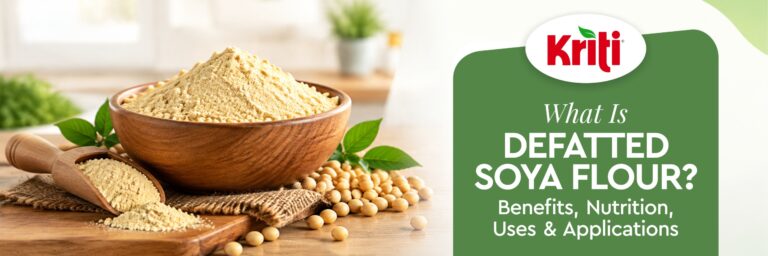
Ever wondered how some everyday foods deliver extra protein without changing the taste or texture of the final product? The answer can often lie in the ingredients used during food production. Soya flour is one such ingredient, and its defatted form has become useful across several food applications.
Defatted soya flour is made by removing most of the oil from soybeans before grinding them into flour. This gives it a higher concentration of protein and makes it useful for protein-rich food formulations. With growing interest in plant-based protein, Kriti Nutrients supplies soy-based ingredients for food processing and nutritional applications.
Key Takeaways
- Defatted soya flour is produced by removing most of the oil from soybeans before grinding.
- It provides a concentrated source of soy protein for different food formulations.
- It can be used in bakery products, snacks, protein-rich foods and other food applications.
- Toasted and untoasted varieties are available for different manufacturing requirements.
- Processing quality, packaging and supplier standards are important when selecting the right product
What Is Defatted Soya Flour?
Defatted soya flour is a soy ingredient made from soybeans after most of the natural oil has been removed. The remaining soy material is processed and ground to a fine flour that can be added to various food formulations. The oil is mostly removed, which raises the protein content of the flour. This makes it a useful ingredient for food manufacturers who want to enhance the nutritional quality of their products without adding large amounts of fat.
Moreover, the ingredient provides valuable functional properties in the food processing including water absorption and better consistency of the formulation.
How Is Defatted Soya Flour Made?
The production process begins with carefully cleaned soybeans. The beans are then processed to remove the hull and extract the oil. The remaining material goes through further processing before being ground and sieved into the required flour size.
The basic process includes:
- Cleaning and preparing the soybeans
- Dehulling the beans
- Extracting soybean oil
- Processing the remaining soy material
- Grinding and sieving
- Testing and packaging the finished product
Depending on the intended application, manufacturers may use toasted or untoasted varieties. Particle size can also be adjusted according to production requirements.
Nutritional Benefits of Defatted Soya Flour
The main nutritional characteristic of the defatted soya flour is its high protein content. During processing, much of the oil is removed, so the ingredient is a concentrated source of protein relative to full-fat soy flour.
It can be included in formulations where manufacturers want to increase protein content while keeping fat levels controlled.
Other nutritional characteristics include:
- A useful source of plant-based protein
- Dietary fibre
- Soy-derived nutrients
- Lower fat content than full-fat soy flour
- Suitable for protein-enriched food products
These qualities make it useful for businesses developing nutritious foods and other soy-based products.
Common Uses of Defatted Soya Flour
Defatted soya flour can be used across a range of food products. Its protein content and functional properties make it suitable for both traditional formulations and newer food products.
Common applications include:
| Application | Use |
| Bakery products | Adds protein to breads, biscuits and bakery mixes |
| Snacks | Supports protein enrichment in selected snack formulations |
| Protein foods | Used in products designed to provide additional protein |
| Vegetarian foods | Can be included in plant-based food formulations |
| Food mixes | Helps improve nutritional value and formulation properties |
The versatility of the ingredient makes it a useful choice among food processing ingredients used by modern manufacturers.
Defatted Soya Flour vs Full-Fat Soya Flour
The main difference is the amount of oil retained after processing. Full-fat soya flour retains much of the soybean’s natural oil, while defatted flour has most of the oil removed.
The right choice depends on the recipe, nutritional target and manufacturing process.
| Feature | Defatted Soya Flour | Full-Fat Soya Flour |
| Oil content | Lower | Higher |
| Protein concentration | Generally higher | Generally lower |
| Main use | Protein-rich formulations | Products where soy oil is also desired |
| Storage considerations | Lower oil content can support easier handling | Greater attention may be needed for oil stability |
How to Choose a Reliable Defatted Soy Flour Manufacturer
Choosing a suitable supplier is important when the ingredient is being purchased for regular food production. Businesses should check the quality of raw materials, processing methods, testing procedures, packaging and supply capacity. Kriti Nutrients follows controlled processing and quality practices for its defatted soya products, with different forms and specifications available according to application requirements.
Businesses should also check:
- Product specifications and protein content
- Raw material sourcing
- Processing and hygiene standards
- Packaging and storage conditions
- Batch consistency
- Ability to meet regular bulk requirements
Working with an experienced defatted soy flour manufacturer can help food businesses maintain consistency across production batches.
Why Quality is Essential in Defatted Soya Flour
The quality of the ingredients can affect the texture, nutritional value and performance of the final food product. The right processing guaranties the required quality of the flour and the proper packaging protects it during storage and shipping.
Therefore, manufacturers should choose ingredients according to the intended application and check the supplier’s quality systems prior to regular ordering.
Conclusion
Defatted soya flour is a versatile soy ingredient that combines high protein content with useful functional properties. It is suitable for a wide variety of food formulations including bakery products and snacks to protein-enriched foods.
Choosing the right product and supplier can help manufacturers maintain nutritional quality and consistency across their production. Kriti Nutrients provides quality soy-based ingredients for businesses looking for reliable solutions for modern food manufacturing and protein-rich formulations.
FAQs
Is defatted soya flour high in protein?
Yes, defatted soybeans are known for their high protein content. A lot of the soybean oil is removed, which leaves more protein in the flour when it's done.
What is defatted soy flour used for?
It is used in bakery products, snacks, protein enriched foods, vegetarian products, food blends and other formulations where extra soy protein is required.
What is the difference between defatted and full-fat soya flour?
Defatted soya flour has most of the oil taken out of the soybeans, while full-fat soya flour contains most of the natural oil. This difference affects their nutritional makeup and their ability to adapt to different formulations.
How should businesses select a supplier?
Businesses should check the quality of raw materials, processing standards, product specifications, testing, packaging, batch consistency and the capacity of the supplier to meet regular production requirements.