
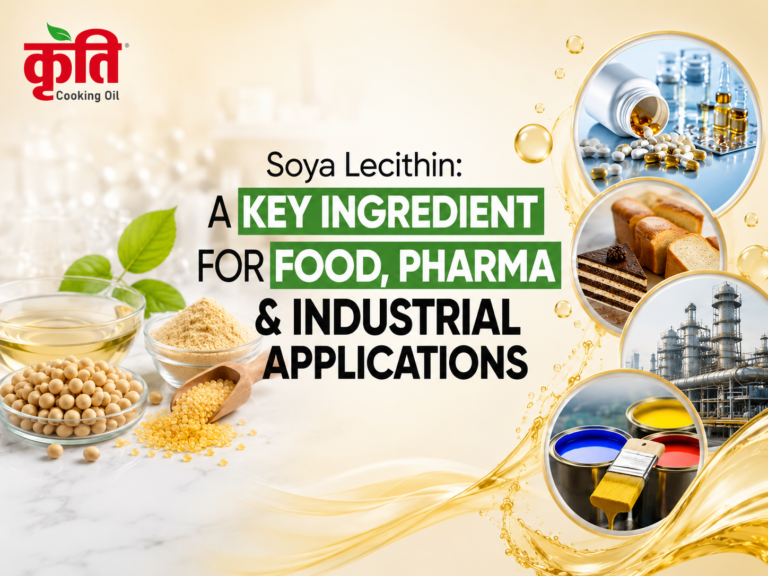
Have you ever wondered how chocolates get their smooth texture, bakery products maintain consistency, or packaged foods achieve better blending? Behind many everyday products are specialised ingredients that help manufacturers improve quality and production efficiency. One such ingredient is soya lecithin, a plant-based ingredient widely used across food, pharmaceutical, and industrial sectors. Its natural emulsifying properties help improve texture, ingredient mixing, and stability in different formulations.
With the rising demand for functional food ingredients, manufacturers are exploring plant-based solutions that support modern production needs. Kriti Nutrients supports these requirements with quality soy-based ingredients designed for food, pharmaceutical, and industrial applications.
From chocolates and bakery products to nutritional supplements and specialised formulations, soya lecithin has become an important ingredient for businesses looking for consistent performance and reliable quality.
Key Takeaways
- Soya lecithin is a versatile ingredient used in food, pharma, and industrial applications.
- It helps improve texture, blending, and consistency in different products.
- Food manufacturers use it in chocolates, bakery items, processed foods, and nutritional products.
- Quality processing plays an important role in maintaining ingredient performance.
- Choosing the right supplier helps businesses access reliable soy-based ingredients.
What is Soya Lecithin?
Soya lecithin is a naturally occurring constituent of the oil produced in the process of soybeans. It is rich in phospholipids that are useful to form emulsions, which are normally hard to make, and is used as a food emulsifier.
Its ability to improve blending and texture makes it valuable across several industries. Since it is derived from soybeans, it is also considered a plant-based ingredient suitable for manufacturers looking for natural solutions.
Common applications of soya lecithin include:
- Chocolate and candy items
- Bakery items
- Nutritional supplements
- Dairy alternatives
- Processed foods
- Pharmaceutical formulations
Lecithin is a common ingredient in food products for a number of manufacturers that help to maintain consistency and quality as part of their formulations.
How to Make Soya Lecithin?
Soya lecithin is extracted during the process of soybean oil production. The soybean oil is removed and lecithin rich materials are separated, refined and used for various purposes.
| Stage | Process |
| Soybean Processing | Soybeans are processed to extract oil |
| Lecithin Separation | Lecithin is separated from soybean oil components |
| Refining | The ingredient is processed for better usability |
| Packaging | Finished lecithin is prepared for supply |
Depending on the requirements, manufacturers may use different forms. For example, soy lecithin powder is preferred for certain formulations where a dry ingredient is required.
Different Forms of Soya Lecithin Available for Manufacturers
Soya lecithin comes in various forms depending on the needs of the manufacturer and the type of use. The selection of the right form can help companies to get better production results.
| Form of Soya Lecithin | Common Applications |
| Liquid Soya Lecithin | Chocolate production, bakery items, and food processing |
| Powder Soya Lecithin | Nutritional products, supplements, and dry formulations |
| Granulated Soya Lecithin | Functional foods and specialised applications |
Manufacturers select lecithin forms based on factors such as production methods, storage requirements, and product formulation needs. Different forms of soya lecithin make it suitable for various industries such as food, pharma and industrial.
Why Food Manufacturers Use Soya Lecithin
Soya lecithin is used by food manufacturers for its ability to enhance the texture of food products, blending of ingredients and the uniformity of the product. It is used extensively in chocolates, bakery products, confectionery and processed food products.
Kriti Soya Lecithin is utilized in the food industry to enhance the mixing, texture improvement and formulation stability of products.
Key benefits include:
- Acts as a support in ensuring uniform mixing of ingredients
- Promotes smoothness in chocolate and bakery goods.
- Enhances speed, consistency and reliability in mass production
- Adapts to various plant and edible ingredients
The demand for food-grade soy lecithin continues to grow as companies develop more functional foods, packaged products, and nutritional formulations.
Applications of Soya Lecithin Across Industries
| Industry | Application |
| Food Industry | Chocolates, bakery products, confectionery, processed foods |
| Pharmaceutical Industry | Supplements, capsules, and health formulations |
| Industrial Sector | Cosmetic products, specialty formulations, and processing solutions |
In the pharmaceutical sector, lecithin is used because of its natural emulsifying properties and ability to support stable formulations.
Lecithin is also used in industry for blending and stabilizing properties. The rise in Non-GMO Soy Lecithin is driven by consumer demand for ingredients that are both traceable and plant based.
Factors to Consider Before Buying Soya Lecithin for Industrial Use
Manufacturers need to evaluate several factors before selecting soya lecithin for their production requirements. Product consistency, processing efficiency and quality of the product could be affected by the quality of ingredients.
Important factors to check include:
1. Quality and purity of ingredients: Soya lecithin should be of a high quality and purity to meet safety requirements for use in food and industry.
2. Processing methods: Proper extraction and refining processes help maintain the functional properties of lecithin.
3. Application suitability: Different industries may require specific forms of lecithin depending on their product requirements.
4. Packaging & Storage: Appropriate packaging for the retention of the quality of ingredients during transport and storage.
5. Supplier experience: An experienced supplier can deliver quality and assistance to regular production.
Soya lecithin manufacturers, or businesses that need the lecithin in their products, should look for suppliers that adhere to quality practices and are able to supply consistent batches.
How to Choose the Right Soya Lecithin Supplier
For businesses that depend on consistent ingredient quality, it’s essential to choose a dependable supplier. Before choosing a supplier, manufacturers should check:
- Quality-controlled production processes
- Hygienic manufacturing facilities
- Product consistency
- Proper packaging standards
- Supply capacity
- Quality certifications
A reputable Soy Lecithin Manufacturer should ensure the processing standards are optimal and every batch meets the same quality.
Kriti Nutrients focuses on quality-controlled processing, hygienic manufacturing, and consistent supply standards to support businesses requiring reliable soy-based ingredients.
Why Soya Lecithin is Growing in Demand
The demand for soy-based ingredients is increasing as industries look for versatile solutions for modern production. Lecithin is being used in various industries due to the growing demand for plant-based ingredients, functional foods and clean label products.
Food manufacturers, pharmaceutical firms, and industrial manufacturers are still investigating lecithin to help with various applications and promote product quality.
Conclusion
From chocolates and bakery products to pharmaceutical formulations and industrial applications, soya lecithin has become an important ingredient across multiple industries. It is useful for manufacturers for improving blending, texture and consistency of a variety of products.
By selecting high-quality ingredients and collaborating with skilled suppliers, businesses can ensure that products are produced consistently and meet high quality standards. Kriti remains committed to the food and industrial sectors providing quality soy-based ingredients to meet the demands of today’s food processing industry.
Looking to enhance your manufacturing process? Explore how the quality soy ingredients from Kriti Nutrients can help to enhance product consistency, streamline processing and boost production reliability.
FAQs
1. What is soya lecithin used for?
Soya lecithin is added to foods, pharmaceuticals and industrial products to enhance the mixing, texture and consistency of ingredients.
2. Why do food manufacturers use soya lecithin?
Food manufacturers use it because it works as a natural emulsifier and helps improve product quality in chocolates, bakery products, and processed foods.
3. Is soya lecithin a vegetarian product?
Yes, soya lecithin comes from soybeans and is a popular plant-based ingredient.
4. What is Non-GMO Soy Lecithin?
Some manufacturers prefer to use non-GMO Soy Lecithin made from soybeans that have not been genetically modified.
5. How can a business select the appropriate soy lecithin supplier?
Businesses need to look at the experience of suppliers, manufacturing standard, quality testing, packaging and the supply capability before choosing a supplier.